ILW Publications 

To order ILW publications free of charge, send an e-mail to ILWPublications@ausa.org or call 800-336-4570, ext. 4630. Please provide your name, address, daytime number, the title and number of the publication you wish to receive and, if you are a member of AUSA, your member number. Please note that the numbers on some ILW products end with “W”; this means those publications are available only online. For more information, call 800-336-4570, ext. 2627.
 

 Latest Publications


 Thinking About the 21st Century Security Environment: The Need for a Whole-of-Government Approach
by General Gordon R. Sullivan, USA Ret. (National Security Watch 12-1W, January 2012)

National Security Watch 12-1W examines how more interagency involvement in fighting the wars in Iraq and Afghanistan might have led to an earlier conclusion and with a more satisfactory outcome for all participants. Perhaps the United States would not have been so slow to learn and adapt, as has been the case in both wars. More interagency involvement might also have encouraged a civil–military discourse at the strategic level that would have produced more reasonable U.S. strategic objectives, thus avoiding the second- and third-order difficulties in execution and in communication to the American people that we have witnessed. The paper also discusses how, operationally, the inadequate interagency effort made the stability, support and counterinsurgency operations much less effective than they could have been.


 AUSA + 1st Session, 112th Congress = Some Good News
(Special Report, January 2012)

Briefly describes the major objectives AUSA supported in the first session of Congress and what actions were taken for each. In passing the 2011 Budget Control Act, Congress acknowledged the national budget shortfalls while also attempting to maintain the military’s readiness in uncertain times and an ongoing war in Afghanistan. This publication examines the112th Congress’s successes and failures in authorizing some important proposals supported by AUSA.


Unleashing Unlimited Potential: The Army Warrior Care and Transition Program in 2011
(Defense Report No. 11-4, October 2011)

Defense Report 11-4 examines how the Warrior Transition Command (WTC), which oversees the Army’s Warrior Care and Transition Program (WCTP), has made impressive progress in automation, documentation and training programs for medical, rehabilitation, patient care, ministry and other professionals who work with each Soldier and family to put together a step-by-step, comprehensive plan for recovery and preparation for the future. Also implemented over the past year is the Army Warrior Care Tracking System (AWCTS), which provides improved capabilities to track each Soldier’s progress every step of the way. Over the past year WTC has addressed all 56 recommendations made by a November 2010 Department of the Army Inspector General (IG) report on the WCTP. This Defense Report discusses the implementation of some of the best practices that resulted from these recommendations.


A Case for Human Dimension Training: Decision Science and Its Potential for Improved Soldier Resilience and Decisionmaking at Every Level
by Kevin M. Felix (Land Warfare Paper 85, October 2011)

Land Warfare Paper 85 examines decision science, a field that explores the interconnected influences of emotion, neuroscience and psychology in shaping human judgments. The Soldier as teammate, team leader, decisionmaker, member of a household and individual can benefit from current and future decision science research. It can start a positive chain reaction of better-informed decisions for the Soldier at home and on the battlefield. The author argues that creating a cadre of “decision engineers” has the potential to bridge existing gaps between science and military application and to push decision science further, by looking for continuous applications within the domain of the Soldier as individual and as leader/decisionmaker. The basic result of this research—greater emotional self-awareness for Soldiers—can come about through the growth, understanding and application of decision science.


Fiscal Year 2012 Army Budget: An Analysis
(Special Report, September 2011)

Fiscal Year 2012 Army Budget: An Analysis details the resources required for the Army to accomplish its missions today and tomorrow. It examines the Army’s proposed budget in the context of the federal and Department of Defense budgets and breaks down requests according to funding authority and programs, from Soldiers’ pay to research and development. It explains budget terminology and procedures, including the supplemental funding process that is necessary for the Army to sustain the current level of operations and provide for Soldiers.


Network Integration Evaluations: Developing Technologies with the Army’s Industry Partners
(Defense Report No. 11-3, September 2011)

Defense Report 11-3 examines how Network Integration Evaluations (NIEs) represent a new way of doing business for the Army; the NIE series is designed to evaluate and integrate emerging technologies before they are sent downrange. The first NIE is resulting in numerous key lessons learned regarding networking technologies. Future NIEs, currently in the planning stages, will accommodate these changes and work to establish a network baseline. Networking the individual dismounted Soldier so as to ensure improved battlefield awareness is a key element of the ongoing NIE process.


Laying the Groundwork for the Army of 2020
(Landpower Essay 11-2, August 2011)

Landpower Essay 11-2 comprises the remarks of General Robert W. Cone, Commanding General, U.S. Army Training and Doctrine Command (TRADOC), at AUSA’s Combined Arms Maneuver Symposium and Exposition in Kansas City, Missouri, on 26 July 2011. General Cone describes the Army Concept Framework—a series of seminal ideas published by TRADOC to define capabilities for 2020—which consists of the Army Capstone Concept, the Army Operating Concept and the six warfighting functional concepts. He outlines a vision for the future force—the Army of 2020—and discusses how the core competencies of combined-arms maneuver and wide-area security play a vital role in creating the ability to conduct future unified land operations.


One Step Forward, Two Steps Back: Mission Command versus the Army Personnel System
by Donald E. Vandergriff (Land Warfare Paper 84, August 2011)

Land Warfare Paper 84 examines how Mission Command would operate in contrast to the environment the U.S. Army has known since the Industrial Age. According to the author, Mission Command would inevitably see a reduction in undue competition between officers and noncommissioned officers; with this shift, trust and flexibility would become more widespread throughout the institution. This paper addresses the cultural ramifications that make the U.S. Army personnel system perfectly suited to support Mission Command because its members are managed as professionals. In his support of Mission Command, the author poses many questions that must be addressed in order to develop a feasible and efficient personnel system to support the U.S. Army in the 21st century.


The Professional Military Ethic and Political Dissent: Has the Line Moved?
by Eric A. Hollister (Land Warfare Paper 83, August 2011)

Land Warfare Paper 83 discusses how the military–political line has moved since the United States won its independence. Legislation intended to keep the country’s military leaders and servicemembers out of political debates and decisionmaking has often proved insufficiently specific, opening statutes and regulations to a wide variety of interpretations. The author attests that legislation is not the primary issue in determining the military–political boundary. Rather, the country’s military and political leaders need to reassess how this line should be drawn when considered alongside the current operational environment, generational shifts and technological innovations.


First with the Truth: Synchronized Communications in the Counterinsurgency Fight
by Richard D. Hooker, Jr. (Landpower Essay 11-1, August 2011)

Landpower Essay 11-1 examines how Combined Joint Task Force (CJTF) 82’s experience in Operation Enduring Freedom suggests a way ahead for mastering the information domain in counterinsurgency. The 82d Airborne Division’s 2009–2010 rotation as the core headquarters for CJTF82 and Regional Command(East)—RC(E)—in Afghanistan marked an innovative break with the past in evolving counterinsurgency (COIN) doctrine and practice. In the critical area of synchronized communications, CJTF82 implemented new approaches at the CJTF level. Both structural and conceptual, these changes marked a clear departure from past practices, refined existing procedures and suggested new doctrinal concepts and approaches.


What Drives Pakistan’s Interest in Afghanistan?
by LTC Christopher L. Budihas (Land Warfare Paper 82, April 2011)

Land Warfare Paper 82 examines the current regional dynamics that explain how national security drives Pakistan’s ultimate interest in controlling Afghanistan. To preserve national unity, Pakistan must use Afghanistan to guard against internal militant groups as well as its aggressive Indian neighbor. Stable national security is also necessary for Pakistan to achieve the economic growth necessary to achieve global leadership within the international community. The author also provides recommendations for future U.S. strategies and finds that failure to understand the complexities analyzed in this article could lead to a failed NATO strategy in Afghanistan and a debunked U.S.–Pakistani–Afghan partnership. With Pakistan’s security, politics and economy inextricably linked with Afghanistan, the relationship between these two countries must be recognized by regional and international policymakers.


Equipping the Reserve Component for Mission Success at Home and Abroad
(Defense Report 11-2, June 2011)

Defense Report 11-2 examines how the Army plans to evaluate and implement recommendations from the Independent Panel Review of Reserve Component Employment in an Era of Persistent Conflict study commissioned by the Secretary of the Army and the Chief of Staff, Army in May 2010. Operations Enduring Freedom, Iraqi Freedom and New Dawn triggered a paradigm shift that transitioned the RC from a strategic reserve to an operational reserve.  However, despite the cooperation on the battlefield, changing conditions and preexisting equipment shortages present new issues concerning equipment transfers and automation systems. This Defense Report discusses what steps the Army has taken, with great success, in efforts to develop transparent equipment processes and to better equip Soldiers—both in the RC and AC—who are going into harm’s way with the most capable systems possible.


The 2011 National Military Strategy: Resetting a Strong Foundation by Nicholas R. Krueger
(National Security Watch 11-2, 2 May 2011)

National Security Watch 11-2 examines how the international security environment has changed since the previous National Military Strategy was produced in 2004 and how these changes have shaped the 2011 National Military Strategy. The NMS serves two main purposes: to assess the global security situation and some emerging forces likely to mold it in the future, and to identify a set of discrete national military objectives that define the main missions to be undertaken by the armed forces. The 2011 NMS discusses challenges presented by ten years of continuous combat operations, the longest span in our country’s history. During this time, America’s adversaries have been innovative: state actors have been arming, nonstate actors have been subverting and the nexus of state and nonstate actors has become even more threatening. The new NMS incorporates these recent developments and aims to supply the armed forces with strategic direction for the future.


Win, Learn, Focus, Adapt, Win Again by General Martin E. Dempsey
(Special Report, March 2011)

This compilation of writings by General Martin E. Dempsey—six articles published in ARMY magazine from October 2010 to March 2011, plus the speech he delivered at AUSA’s 2011 Winter Symposium in February—captures the mutual focus of General Dempsey and General George W. Casey on what our Army must do to shape itself for the future. These articles are based around an ongoing dialog, which also included other senior Army leaders, that has been focused on charting the Army’s direction when, after years of combat, it again transitions as a trained and ready force into another uncertain future such as we faced after the Gulf War. There is recognition that our Army is always a force in transition, that it will expand and contract, train and deploy, and perpetually modify its Tables of Organization and Equipment.


The Enduring Need for an Effective U.S. Landpower Presence in Europe
(National Security Watch 11-1, 14 February 2011)

National Secuirty Watch 11-1 examines U.S. landpower in Europe and its importance to preserving strategic flexibility and regional stability while preserving the legitimacy and efficacy of multinational coalition operations around the globe. U.S. global power in the modern era rests on a set of enduring strategic principles that remain constant in a shifting political landscape. Collective defense, ally reassurance, crisis response, partner building and freedom of action are fundamental pillars to U.S. strategic stability. U.S. landpower in Europe has been the embodiment of those principles for the last half century, clearly demonstrating the nation’s commitment and strategic intent to international peace and stability. Recent discussions about budgets, burden-sharing and force retrenchments have cast an ominous shadow over U.S. landpower in Europe, despite its significant current and future value in support of U.S. strategic interests around the globe.
 

The French-British Defense Treaty: Setting History Aside?
(Defense Report 11-1, January 2011)

Defense Report 11-1 examines the “Declaration on Defence and Security Co-operation,” a defense treaty signed by France and Britain on 2 November 2010. This Defense Report looks at how the treaty may pave the way to a new level of cooperation, surpassing anything previously achieved between the two countries on a bilateral basis. France and Britain are well matched to cooperate on defense as equal partners, given the similarities in national objectives and capabilities. This report discusses how the steps put forth in the treaty will rely on commonality of policy and objectives.


Assembly Line to Custom Design: Reforming the Officer Development System by Maj. Kent W. Park
(Land Warfare Paper No. 81, October 2010)

Land Warfare Paper 81 discusses a whole-of-government approach to address future security threats. This approach calls for government agencies to leverage civilian expertise to provide integrated “soft-power” solutions to complement proven “hard-power” options. The paper examines how the U.S. government’s plan to combine these two approaches into an effective strategy (“smart power”) also necessitates an understanding that the development of junior officers is the most effective way to shape organizational culture. According to the author, this bottom-up approach requires a long-term perspective but will ultimately create the most durable cultural change.


Leveraging Science in the Manoeuvrist Approach to Counterinsurgency Operations by Ernest Y. Wong
(Land Warfare Paper No. 80, October 2010)

Land Warfare Paper 80 examines how military planners can utilize modern scientific principles to improve understanding of insurgencies and leverage what is learned into even better counterinsurgency (COIN) doctrine. In particular, the author addresses what we can discern from Disruptive Change, Complexity Theory and Markov Chains to help in formulating winning COIN strategies that will prevail in the 21st century. The paper discusses how the Manoeuvrist Approach, which British military doctrine defines as a focus on shattering an enemy’s will to fight through skillful identification of the enemy’s vulnerabilities, is instrumental to analyzing the insurgent fight.


A Shot in the Dark: The Futility of Long-Range Modernization Planning by LTC Eric A. Hollister
(Land Warfare Paper 79, October 2010)

Land Warfare Paper 79 shows why the utility of long-range future modernization planning should be revisited in this era of persistent conflict. According to the author, the complexities of the environments for which the Army is required to plan makes predicting the future—and being prepared for the next war—impossible. The author examines changes that occurred during the post-Vietnam era, includes a review of past Army futures studies and discusses the Army’s most recent attempt at modernization, the Future Combat Systems program. The paper uses the National Security Strategy, the Quadrennial Defense Review and the Army Modernization Strategy to suggest a framework for future modernization and a less risky method for long-range futures studies.


Fiscal Year 2011 Army Budget: An Analysis
(Special Report, October 2010)

Fiscal Year 2011 Army Budget: An Analysis details the resources required for the Army to accomplish its missions today and tomorrow. It examines the Army’s proposed budget in the context of the federal and Department of Defense budgets and breaks down requests according to funding authority and programs, from Soldiers’ pay to research and development. It explains budget terminology and procedures, including the supplemental funding process that is necessary for the Army to sustain the current level of operations and provide for Soldiers.


Capability Portfolio Reviews
(Defense Report 10-3, September 2010)

Defense Report 10-3 takes a look at the Capability Portfolio Review (CPR), a new tool created to evaluate the efficiency and effectiveness of the whole range of Army programs, both material and non-material. While not designed to cut or save a certain dollar amount, the CPR is supposed to reveal potential savings by validating the link between requirements and capabilities. Two of 11 total CPRs have concluded, with the remainder scheduled to proceed over the next five years, ensuring that the warfighter receives the maximum capability and the taxpayer derives maximum value.


Looking Forward: People First by Gregory Motes
(Landpower Essay No. 10-2, September 2010)

Landpower Essay 10-2 examines the future operating environment of the U.S. Army in a world increasingly dependent on new technology. The author discusses the importance of educating and training Soldiers and leaders while developing new devices, systems and data networks. The author proposes that a balance between knowledge about technology and knowledge derived from contextual training or introspection will best ready the U.S. Army for future demands and challenges.


Grey Eminence: Fox Conner and the Art of Mentorship by Major Edward Cox
(Land Warfare Paper No. 78W, September 2010) 

Land Warfare Paper 78W combines existing scholarship with long-forgotten references and unpublished original sources to achieve a comprehensive picture of Fox Conner, a dedicated public servant whose life and service to the Army and the nation are revealed primarily through passing references in the memoirs of other great men. Conner’s influence helped to shape the careers of George Patton, George Marshall and, most notably, President Dwight D. Eisenhower. The portrait that emerges here  also provides a four-step model for developing strategic leaders that still holds true today.


New NATO Member States: The Benefits and Drawbacks of Enlargement" by Christine Le Jeune
(Land Warfare Paper No. 77, September 2010) 

Land Warfare Paper 77 addresses the question of NATO’s relevance by examining the results of its geographical expansion. Regardless of the conclusions reached in NATO’s 2010 Strategic Concept, the fact remains that the alliance is only as strong as its member states. A fundamental question over the past years has been whether or not NATO expanded too quickly to include members not able to effectively contribute to the collective security capabilities necessary for it to remain a credible defensive alliance. The paper examines this question by taking a closer look at the defense transformation of Slovenia and Bulgaria, two Southeast European states both admitted during the 2004 round of expansion.


Consequence Management: Steps in the Right Direction? by Christine Le Jeune
(National Security Watch 10-2, September 2010) 

National Security Watch 10-2 takes a look at the need to build capacity to respond to major national incidents—natural disasters, terrorism, large-scale cyber attacks, pandemics and other potential threats—and the collaborative efforts of federal, state and local governments, communities and public/private partnerships that are necessary to achieve that goal.


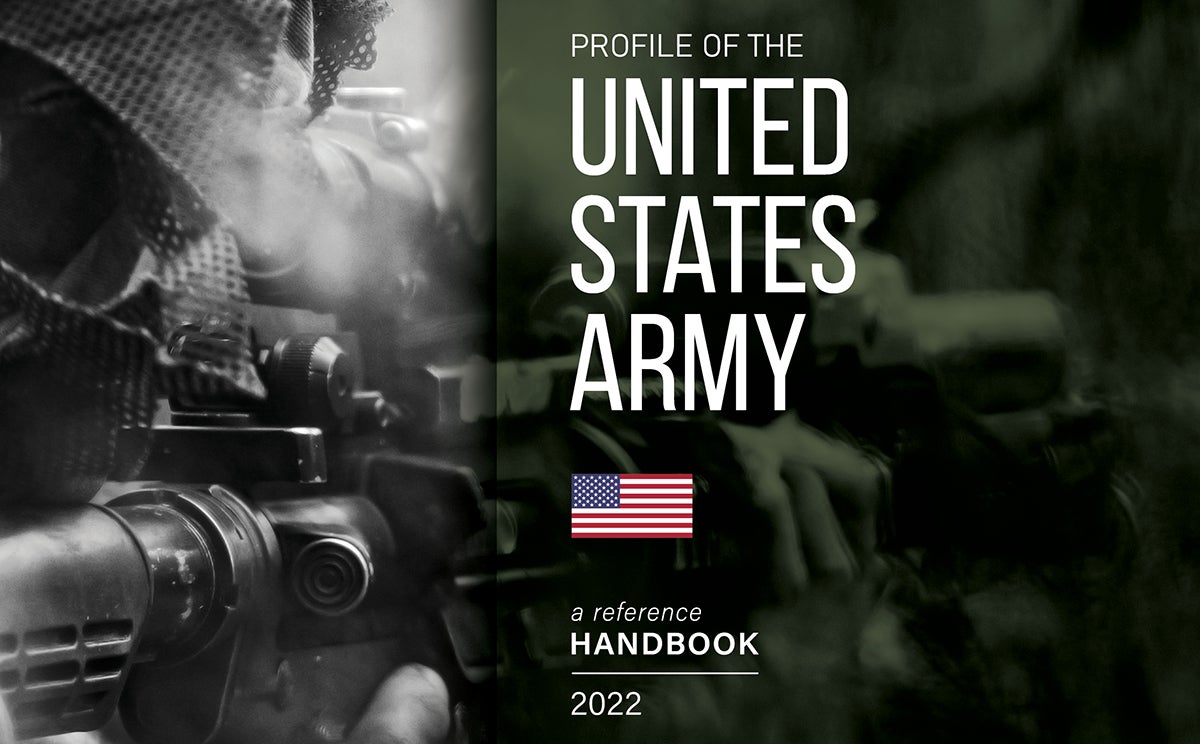
Profile of the U.S. Army – A Reference Handbook - 2010 Edition
(Special Report, July 2010) 

A user-friendly reference book for people familiar with the Army and an easy-to-read introduction for family members, civilian employees, contractors and future Soldiers—takes a top-down approach, first describing the Army’s role as a key element in the national security structure and then flowing into the “why” and “how” of the Army’s organization. It also contains information and helpful graphics on the Soldier, the uniform, the Army’s command structure, Army families, installations and the Army’s current operations. For readers wishing to seek more details, each chapter includes a list of relevant websites. Finally, Profile contains a glossary of acronyms and maps illustrating locations of current Army combat corps and divisions, Army National Guard divisions and brigade combat teams, and Army Reserve direct reporting commands.

 
The (New?) National Security Strategy 
(National Security Watch 10-1, July 2010) 

National Secuirty Watch 10-1 compares the 2010 National Security Strategy (NSS) of the United States with previous versions in the context of goals, ways and means. While widely considered a departure from previous iterations, a closer look at the 2010 NSS compared to those of 2002 and 2006 show it to be not that substantively different. Additionally, the 2010 NSS advances a broad agenda that poses unique challenges to the planning and budgeting process; success will be largely dependent on the ability of the United States to organize and provide itself the means to execute.
 
 
Today's Training and Education (Development) Revolution: The Future is Now
by Donald E. Vandergriff (Land Warfare Paper 76, April 2010) 

Land Warfare Paper 76 discusses the changes the Army is making to its educational system to provide Soldiers with the best tools for success on the battlefield. Today’s highly complex operations have emphasized the importance of quality decisionmaking at junior levels. Even with modern command, control, communications, computer, intelligence, surveillance and reconnaissance (C4ISR) capabilities, the noncommissioned officer or junior officer on the ground sometimes has the best situational awareness and thus is likely to make the best decision—but only if he or she is equipped, intellectually and culturally, to properly assess the situation and creatively arrive at the best solution. Adaptability, critical thinking and creativity have become critical skills for modern Soldiers. The Army’s new approach, Outcomes-Based Training & Education (OBT&E), is an educational philosophy that teaches both basic skills and aids the development of leaders, using the Combat Applications Training Course (CATC ) and the Adaptive Leader Methodology (ALM). These new training and education tools will produce the kind of flexible, adaptable Soldiers and leaders the modern battlefield demands.


The Army Capstone Concept and Institutional Adaptation
(Landpower Essay No. 10-1, March 2010) 

Landpower Essay 10-1 is a transcript of remarks made by GEN Martin E. Dempsey, Commanding General, U.S. Army Training and Doctrine Command, during AUSA's Winter Symposium and Exposition in Fort Lauderdale, Florida, on 25 February 2010. He discusses the latest revision to the Army Capstone Concept, published in December 2009, that describes the broad capabilities the Army will require between now and 2028 to defend America and help to secure U.S. interests in the world. This Capstone Concept reconsiders, rethinks and challenges previous assumptions now that eight years of war have passed and the Army knows more about the 21st century enemy. GEN Dempsey describes the Army's objectives of decentralization, improved mission command, leader development and improving the Army's training and education system.
(Defense Report 10-2, March 2010) 

Defense Report 10-2 discusses the Defense Department's strategy outlined in the 2010 Quadrennial Defense Review Report. The report itself describes the security environment and America's role in the world to provide context for its examination of all the elements of U.S. national defense plans, programs and policies. Four broad objectives are established: to prevail in today's wars; to prevent and deter conflict; to prepare to defeat adversaries and succeed in a wide range of contingencies; and to preserve and enhance the All-Volunteer Force. These top priorities set the direction that defense planning will take for the next four years.


The Army Management Enterprise
(Defense Report 10-1, February 2010) 

Defense Report 10-1 briefly examines how the Office of Business Transformation (OBT), established in April 2009, will help the Army run its business operations more effectively and efficiently, including business systems architecture, information technology acquisition oversight and business process reengineering. In October 2009, the Under Secretary of the Army was designated as the Army's Chief Management Officer, to work with the Army Secretary and other pertinent stakeholders to determine the missions, roles, responsibilities and staffing of the OBT. The Army's business transformation is driven by an urgent requirement to align the end-to-end business processes of the generating force, and the capabilities they provide, to the operational needs of an expeditionary and campaign-capable force.